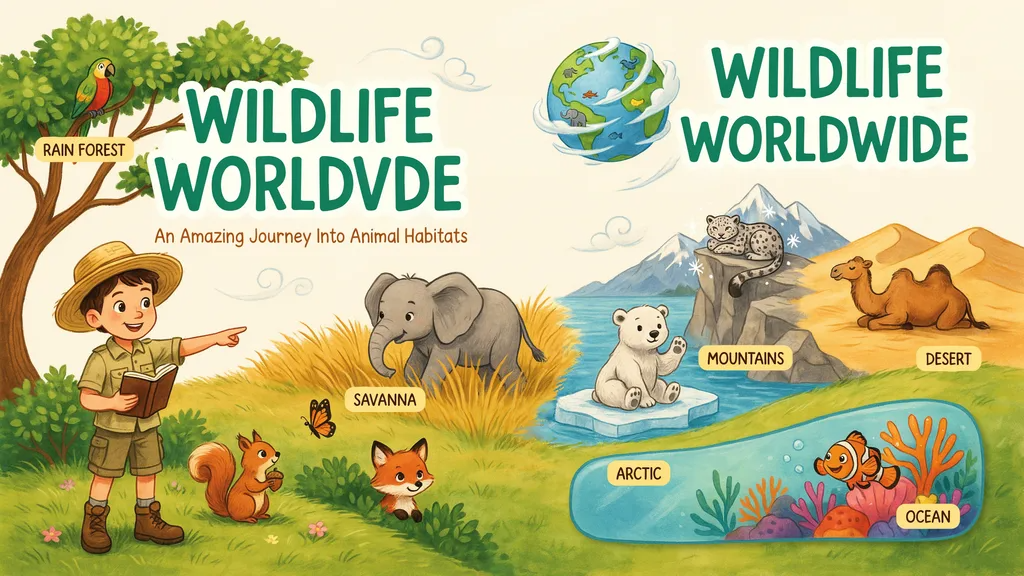
Have you ever wondered where wild animals sleep, eat, and play? When we look at Wildlife Worldwide, we see a giant puzzle made of different homes. From the green trees of the jungle to the white snow of the North Pole, creatures live all around us. As someone who loves watching animals in their natural habitats, I always feel amazed by how every single creature fits into its home. When we study wildlife worldwide, we are really learning the secret stories of planet Earth. Every forest, ocean, and desert tells us a new tale about survival and friendship in nature. Let us take a fun trip together and discover how animals thrive across every corner of the globe. You might just find your new favorite animal along the way!
What Is Wildlife Worldwide?
When people talk about wildlife worldwide, they mean all the wild animals and plants living on Earth. These are not pets like cats or dogs. They find their own food and build their own homes in nature. I remember visiting a local park and watching a tiny squirrel hide an acorn. That tiny moment showed me how smart wild animals are. Across our big planet, wildlife worldwide includes tiny bugs, giant whales, and everything in between. Each animal has a special job to keep nature healthy and balanced. By understanding wildlife worldwide, we learn how rivers, trees, and creatures all depend on each other to live happy lives.
The Magic of the Rain Forest
The rain forest is a loud, green, and wet place full of colorful life. When we look at wildlife worldwide, the jungle holds the biggest group of animal friends. You can hear noisy birds and chattering monkeys high up in the leafy trees. I once saw a tiny tree frog sitting on a bright green leaf, and its colors were so vibrant. Exploring wildlife worldwide in the rain forest shows us how warm weather and heavy rain help plants grow super tall. Many rare creatures live only in these trees. Protecting this part of wildlife worldwide means our children will always get to hear the magical sounds of the jungle.
Cold Wonders in the Arctic
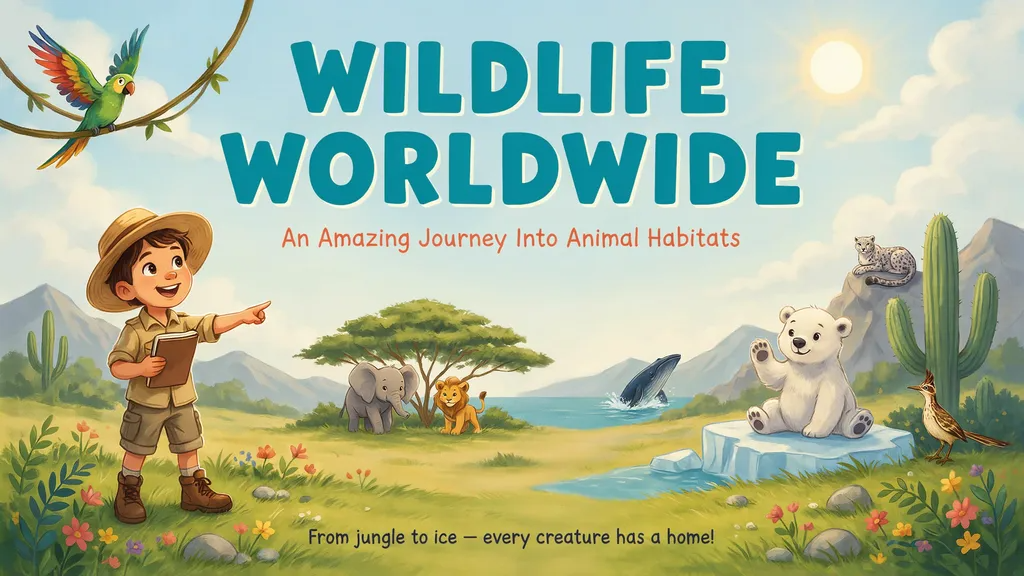
It is freezing cold up in the Arctic, but animals still find a way to thrive. When studying wildlife worldwide, polar bears and cute penguins show us ultimate toughness. They wear thick coats of fur or blubber to stay warm in the snow and ice. I watched a documentary about baby seals sliding on the ice, and their playful energy was contagious. Learning about wildlife worldwide in icy places teaches us that life can adapt to hard conditions. The snowy habitats are a unique part of wildlife worldwide that need cold weather to stay safe. Ice and snow keep these special polar animals cozy and fed all year round.
Life on the African Savanna
The African savanna is a wide, sunny grassland with tall yellow grass and big trees. If you check out wildlife worldwide here, you will spot lions, giraffes, and fast cheetahs roaming free. I always feel a rush of excitement seeing footage of elephants walking together across the dust. This part of wildlife worldwide is famous for large herds moving across the plains to find fresh water. Every animal has a role, like keeping the grass trimmed or finding shade under acacia trees. Observing wildlife worldwide on the savanna helps us appreciate how open spaces give big mammals room to run and grow.
Deep Blue Ocean Secrets
Our oceans cover most of the Earth and hold incredible mysteries beneath the waves. When diving into wildlife worldwide, coral reefs shine like underwater cities filled with glowing fish. Whales sing long, beautiful songs across the deep blue water. I once went on a boat trip and saw a dolphin jump right out of the sea. That splash stayed in my memory forever. The marine part of wildlife worldwide proves that water habitats are just as busy as land habitats. Keeping the oceans clean is vital for these sea creatures. Valuing wildlife worldwide means making sure our blue seas stay pure and full of life.
Desert Survivors
Deserts are super hot during the day and very cold at night, with barely any rain. Yet, wildlife worldwide in the desert finds clever tricks to survive without much water. Camels store energy in their humps, and cute little foxes sleep during the hot midday hours. I read about how cacti hold water inside their thick green stems to help nearby bugs. Discovering wildlife worldwide in dry regions shows us incredible inner strength. These sandy lands might look empty, but they buzz with tiny creatures once the sun goes down. Wildlife worldwide proves that nature adapts to any temperature on Earth.
High Up in the Mountains
High mountain peaks touch the clouds, where the air is thin and chilly. Looking at wildlife worldwide in these rocky places reveals agile mountain goats and shy snow leopards. They jump across steep cliffs like it is nothing at all. I love hiking near rocky hills and spotting hawks flying high above the trees. The high altitude habitats add a wonderful chapter to wildlife worldwide. Rocky slopes give strong animals a safe place away from busy cities. Exploring wildlife worldwide in the mountains reminds us how high places offer breathtaking views and fierce, beautiful creatures.
Why Animals Need Our Help
Sometimes animal homes get smaller because people build houses and roads. When we examine wildlife worldwide, we see that trash and pollution can harm innocent creatures in forests and seas. I always pick up my litter when I go for a walk outside to do my small part. Protecting wildlife worldwide means we care about keeping rivers clean and trees standing tall. Animals cannot speak for themselves, so they rely on us to be their voice. Supporting wildlife worldwide ensures that future generations get to see real bears, birds, and fish instead of just pictures in old books.
Simple Ways You Can Protect Nature
You do not need to be a scientist to help our planet’s creatures every single day. Caring about wildlife worldwide starts right in your own backyard or local park. You can plant flowers for bees, turn off lights to save energy, or recycle plastic bottles. I planted a small butterfly bush last spring and watched friendly caterpillars turn into butterflies. Simple actions build a big impact for wildlife worldwide. When families work together to keep nature clean, animals live longer and healthier lives. Enjoying wildlife worldwide is a shared joy that asks us to be kind and responsible caretakers.
Fun Animal Tracking Tools
Technology makes it so easy and fun to learn about animals from home. With cool apps and live nature cameras, tracking wildlife worldwide feels like a real adventure game. You can watch eagles hatch eggs on a screen or map whale migrations across the ocean. I use a bird identification app in my garden to see what visits my trees. Digital tools bring wildlife worldwide right to our fingertips in a safe and exciting way. Exploring through a screen inspires us to go outside and look closer at our local environment. Learning about wildlife worldwide has never been more interactive and fun!
Conclusion
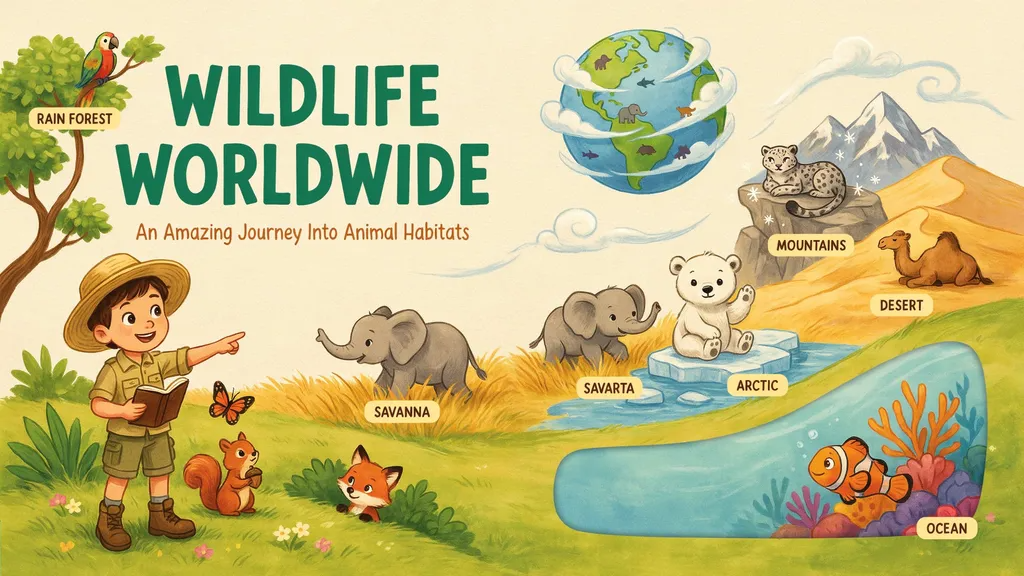
Our planet is a wonderful home shared by millions of amazing animal friends. By exploring wildlife worldwide, we open our eyes to the beauty of nature and our duty to protect it. Every forest, ocean, and mountain holds a living story waiting for us to notice and respect. Let us promise to keep our environment clean, plant more trees, and treat all living creatures with kindness. What is your favorite animal in the wild, and how will you help protect its home starting today?
Frequently Asked Question
What does wildlife worldwide include?
It includes all wild animals, birds, fish, and bugs living naturally on Earth without human help.
Why are rain forests important for animals?
Rain forests provide warm weather, lots of food, and safe shelter for a massive variety of rare species.
How do Arctic animals stay warm?
They grow thick layers of fur, feathers, or blubber to block out the freezing ice and snow.
Can kids help protect nature?
Yes! Kids can recycle, plant flowers for bees, and keep local parks clean of trash.
How can I see wild animals safely?
You can use live nature webcams, visit wildlife reserves, or watch animals from a respectful distance outside.
Why should we care about endangered species?
Every creature has a special job in nature, and losing one species can throw off the whole ecosystem balance.
About the Author